Our Services
Tree Hazard Assessment & Deadwooding in Charlotte, NC
Honest tree-by-tree risk assessments and selective deadwood removal for healthy canopies.
Service Overview
Deadwooding & Hazard Assessment tailored to your property
Most of the trees that fall on Charlotte-area homes during a storm showed warning signs months in advance — dead limbs, included bark at major unions, mushroom conks at the base, cracked leaders, root-zone disturbance from construction. A real hazard assessment catches those signs before the next thunderstorm does. We walk your property, evaluate every significant tree, and tell you honestly what is healthy, what needs deadwooding, what should be cabled, and what genuinely needs to come down.
Across Charlotte, Huntersville, Cornelius, Mooresville, Davidson, Fort Mill, and Tega Cay we do this work for homeowners who care about their canopy, sellers prepping to list, buyers in due-diligence, HOAs managing common-area trees, and commercial property managers who want documentation. No commission on removals, no pressure — just a written report and a quote on whatever work you decide to do.
What we do
A snapshot of the work we commonly take on under this service. Your scope is built from what your property actually needs — pick and choose, or let us recommend.
- Tree-by-tree hazard assessment
- Selective deadwood removal
- Cabling & bracing for structural defects
- Pre-storm canopy inspections
- Pre-listing tree risk reports
- Documented written recommendations
Who it's for
Homeowners with mature canopy
Big oaks, hickories, and pines over the house? Get a real assessment before the next big storm — selective deadwood removal and cabling can extend the life of a great tree by decades.
Buyers & sellers in due-diligence
A documented tree risk report protects sellers from post-close disputes and gives buyers honest information before closing on a wooded lot in Myers Park, Eastover, or Lake Norman.
HOAs & commercial properties
Routine canopy inspections, written reports for board records, and selective deadwooding scheduled to head off liability before someone gets hurt.
How we scope your project
Every property is different, so every quote is too. Here's the general path we take from first call to finished work — adjusted to fit the size, complexity, and goals of your specific project.
1. Walk every significant tree
We walk the property and assess each major tree individually — trunk, root flare, major unions, canopy condition, and proximity to structures or targets.
2. Written assessment & recommendations
You get a written report tree-by-tree: condition, observed defects, recommended action (monitor, deadwood, cable, prune, remove), and rough priority.
3. Prioritized quote
Recommendations are quoted as separate line items so you can do the urgent work now and schedule the rest. No bundling, no pressure to remove healthy trees.
4. Execute the work
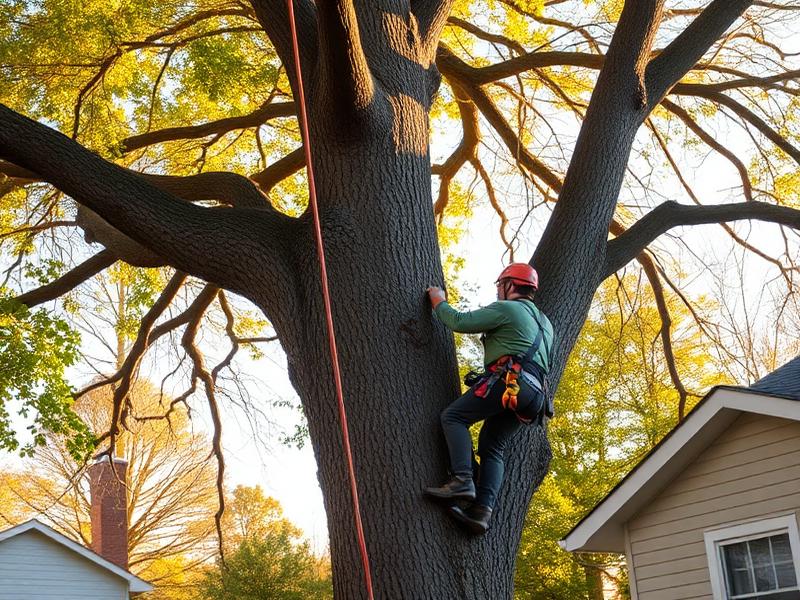
Deadwooding done by climbers and bucket crews to ANSI standards. Cabling and bracing installed where appropriate to support structural weak points without removing the tree.
Why Piedmont Landscape & Irrigation
- Honest assessments — we do not upsell removals on healthy trees. Most reports include trees we recommend keeping.
- Climbers with real canopy-condition experience — defects called out from the inside of the tree, not just guessed from the ground.
- Documented written reports suitable for HOA boards, real-estate due diligence, and insurance records.
- Cabling and bracing offered as legitimate alternatives to removal where the tree is worth saving.
Where we work
We provide deadwooding & hazard assessment across the greater Charlotte NC metro. Click a city for local details, neighborhoods we serve, and project examples:
Frequently asked questions
How much does a tree hazard assessment cost in Charlotte?+
Single-tree assessments are typically $125–$250. Whole-property assessments with a written report run $300–$800 depending on lot size and number of significant trees. The fee is often credited toward any work you decide to schedule.
What is deadwooding?+
Deadwooding is the selective removal of dead, dying, or diseased limbs from an otherwise healthy tree. It reduces the chance of limb failure during storms, improves canopy health, and is far cheaper than full removal.
Can a leaning tree be saved?+
Sometimes. New leans (especially after a storm or with soil heaving at the base) usually mean the tree is failing and needs removal. Old, established leans on healthy trees can often be left alone or supported with cabling. We evaluate root flare, soil, and canopy together to make the call.
Do you provide written reports for insurance or HOAs?+
Yes — written tree risk reports are part of the assessment service. They include observations, recommendations, and photos, and are formatted for use with insurance, HOA boards, or real-estate transactions.
Know your trees. Sleep through the next storm.
Schedule an honest, documented hazard assessment — selective deadwooding, cabling, and removals quoted as separate line items.